
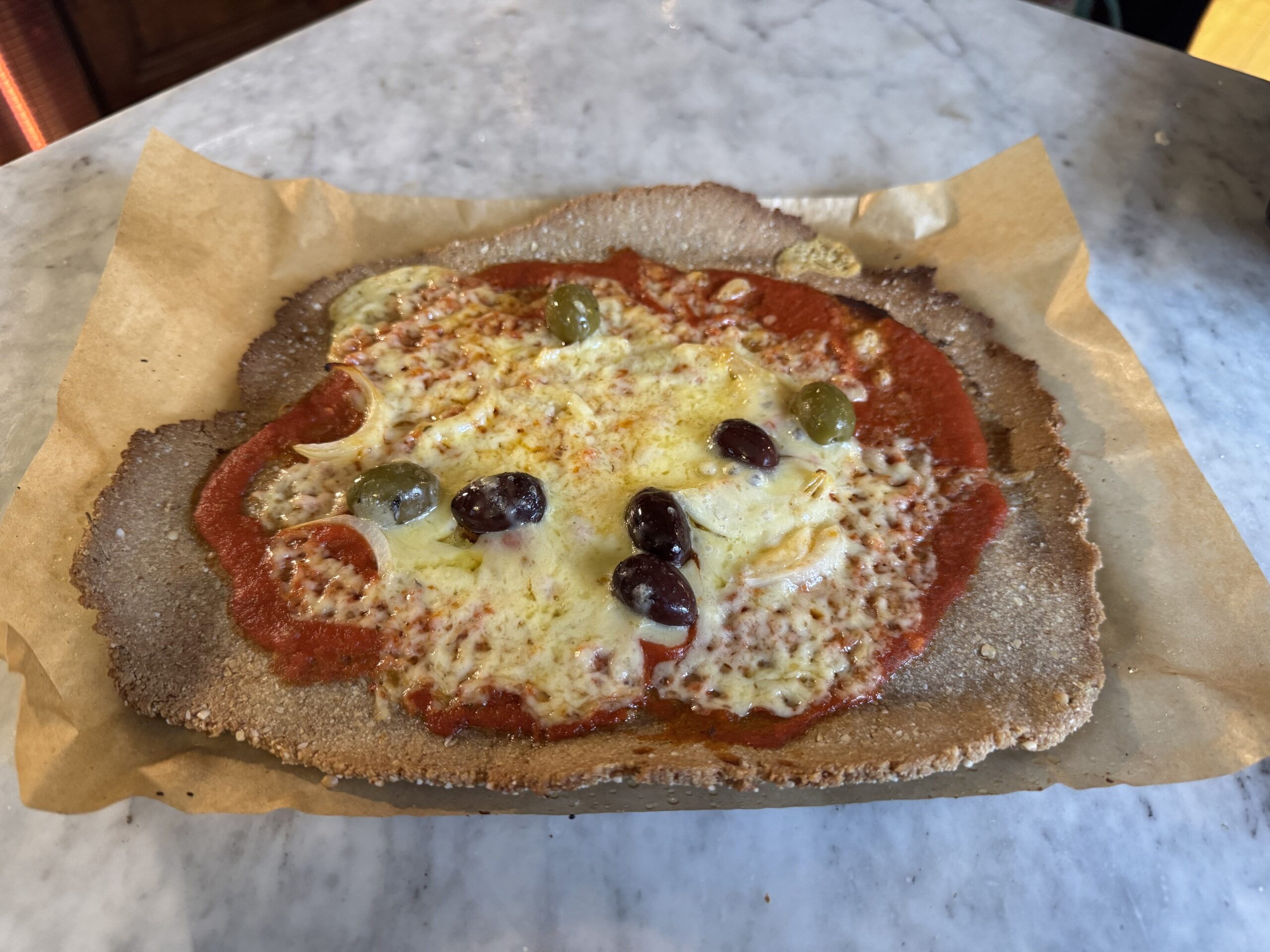
FREE – Gluten-Free & Grain-Free Buckwheat Pizza (From Scratch)

Categories: Healing Through Food
Wishlist Share

About Course

Craving pizza but avoiding grains due to inflammation? This homemade buckwheat pizza is your answer. Made entirely from scratch with nutrient-dense buckwheat flour — a naturally gluten-free seed, not a grain — it’s gentle on digestion and won’t spike inflammatory responses. The crust comes out crispy on the outside, soft on the inside, with a rich, nutty flavor that holds up to any topping. No gums, no starches, no grains. Just real, wholesome ingredients and simple steps. Perfect for anyone on a paleo, gluten-free, or anti-inflammatory diet. Free recipe — ready when you are.

Course Content

Buckwheat pizza – full recipe step by step
Grain-Free Buckwheat Pizza (From Scratch – No Pre-Ground Flour) Makes: 1 large pizza (approx. 30 cm diameter) Prep time: 20 min + 15–30 min resting Baking time: ~18–20 min Oven temp: 250°C (or highest your oven goes – up to 275°C) Ingredients For the dough 200 g raw buckwheat groats (Polish / EU origin, e.g. Forest Food) 120–130 g water (room temperature) 4 g fine sea salt (about ¾ tsp) 2 g dried oregano (optional, about 1 tsp) 2 g garlic powder (optional, about ½ tsp) 1 tbsp olive oil (for brushing before first bake) For the quick tomato base (no cooking needed) 400 g tinned whole tomatoes (drained slightly, keep a little juice) 1 small garlic clove 1 tbsp olive oil 2 anchovy fillets or 1 tbsp capers (rinsed) For the toppings 100 g cheddar cheese, grated Handful of black or green olives ¼ red onion, thinly sliced 50–70 g cooked ham (or any leftover meat / veggies you like) Method 1. Make fresh buckwheat flour Place the 200 g buckwheat groats into a food processor (or high-speed blender). Blitz until you get a fine, powdery flour – about 30–45 seconds. Why this step: Whole groats from a trusted source avoid the micro-toxins and mould sometimes found in pre-ground buckwheat flour. 2. Mix the dough In a mixing bowl, combine the freshly ground buckwheat flour, salt, oregano, and garlic powder. Gradually add 120 g of water, stirring with a spoon or spatula. Mix until a soft, slightly sticky dough forms. If it feels too dry, add the remaining 10 g water. It should be pliable – not crumbly, not sloppy. 3. Rest the dough Cover the bowl with a damp cloth or plate. Let it rest for 15–30 minutes at room temperature. This lets the buckwheat absorb moisture fully and makes rolling easier. 4. Roll out the dough (it is sticky – work on parchment) Tear off a large sheet of parchment paper. Sprinkle a little of your reserved buckwheat flour onto the paper. Place the dough ball on top, then flatten slightly with your hand. Dust the top of the dough and your rolling pin with more buckwheat flour. Roll gently from the centre outward into a circle (~30 cm wide, 4–5 mm thick). Tip: If it sticks, lift the dough and add more flour underneath. The parchment is your best friend here. 5. First bake (pre-bake the crust) Preheat your oven to 250°C (or max setting). Slide the parchment paper with the rolled dough onto a baking sheet or pizza stone (if using a stone, preheat it too). Brush the top of the raw dough lightly with 1 tbsp olive oil. Bake for 8–10 minutes until the edges look dry and lightly golden. This stops the base going soggy later. 6. Make the tomato base (while the crust pre-bakes) In the food processor (no need to wash it from the flour – just wipe quickly), add: drained tomatoes, garlic, 1 tbsp olive oil, and anchovies (or capers). Blitz until smooth. Taste – it should be savoury and bold. 7. Assemble the pizza Remove the pre-baked crust from the oven. Spread the tomato base evenly over the top. Scatter grated cheddar, olives, red onion, and ham (or your chosen toppings). 8. Final bake Return the pizza to the oven (still at 250°C). Bake for another 8–10 minutes, until the cheese is bubbling and starting to brown in spots, and the crust edges are crisp. 9. Serve Let it cool for 2 minutes on a wire rack (keeps the base crunchy). Slice and eat immediately. Extra tips from your method Stickiness control: Keep a small bowl of extra buckwheat flour next to you while rolling – dust often. No anchovies? Use capers for a similar umami kick. Leftover dough? Buckwheat dough doesn’t keep well, so make just one pizza at a time. Storage of groats: Keep your buckwheat groats in an airtight jar in a cool, dark cupboard – they stay mould‑free much longer than flour. Enjoy your anti‑inflammatory, grain‑free pizza – crisp, nutty, and nothing hidden.

  • part 1
    00:00
  • part 2
    00:00
  • part 3
    00:00
  • part 4
    00:00
  • part 5
    00:00
  • part 6
    00:00

Student Ratings & Reviews

No Review Yet
No Review Yet